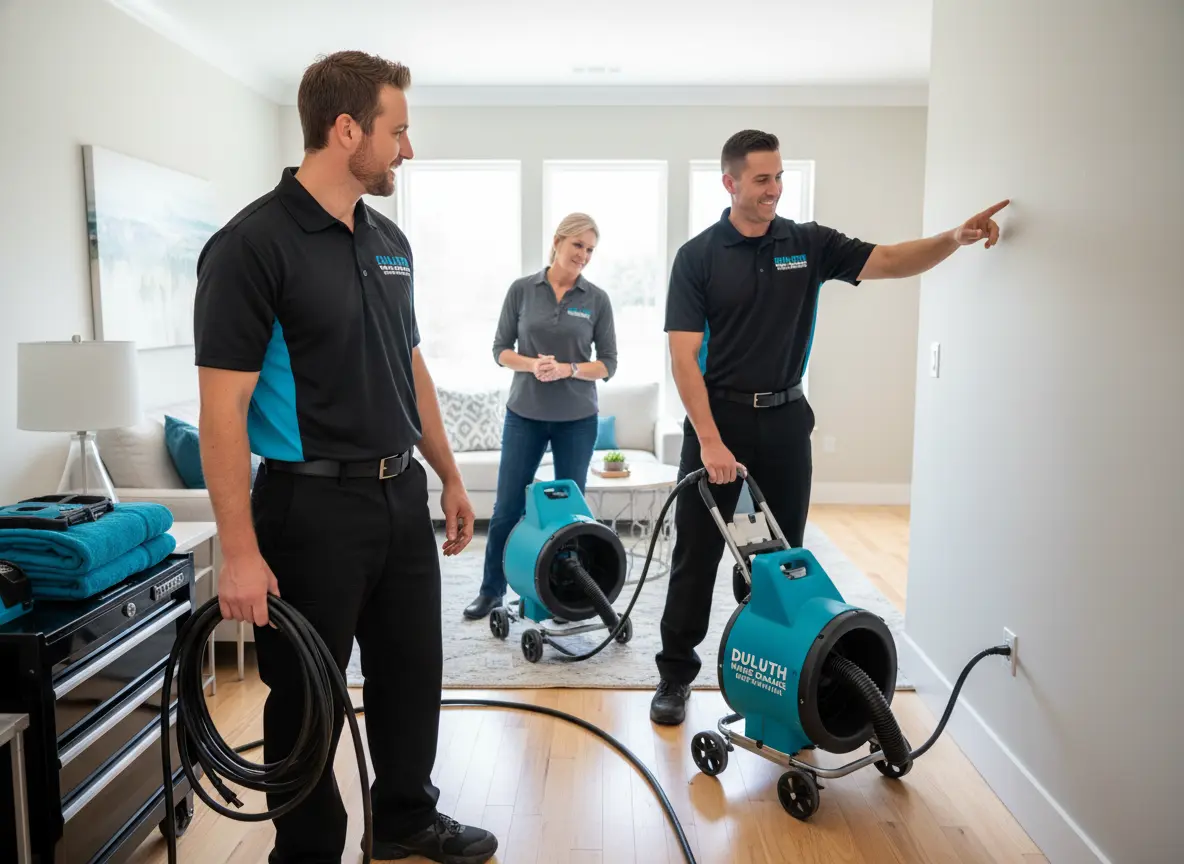
A flooded basement is a structural emergency that directly threatens the foundational stability of your property. Because basements sit below grade, they are highly vulnerable to hydrostatic pressure from oversaturated Gwinnett County soils. When stormwater or a ruptured plumbing line breaches your foundation wall—whether in the low-lying zones of Berkeley Lake or near the water channels of Suwanee Creek—the water remains trapped, wicking relentlessly into porous concrete masonry.
Attempting to drain a basement completely without managing ambient atmospheric vapor can cause serious damage; unequal pressure can actually fracture foundation walls. Furthermore, the stagnant, humid air typical of below-grade spaces accelerates toxic mold germination within 24 to 48 hours. Proper recovery requires heavy industrial extraction, targeted desiccation of structural timbers, and clinical biohazard sanitization to restore your lower level to a verified pre-loss dry standard.
At Duluth Water Damage Restoration, we deploy IICRC-certified sub-surface desiccation teams across Duluth and Parsons Road. We combine structural support with thermodynamics to secure your foundation. Dial (678) 679-5651 for an immediate 24/7 emergency response.
Foundation Desiccation & Structural Interception
Remediating a sub-surface flood is an absolute science centered around **Psychrometric Evaporation Control**. We don’t just clear standing pools; we pull bound moisture out of dense construction materials. Our crews coordinate rapid, high-volume water extraction services to clear standing water from your concrete pads before it can migrate into underlying porous footings.
Thermal Diagnostic Trailing
Water hides deep inside masonry block voids and behind drywall finishes. We utilize advanced infrared cameras to track these hidden damp pathways, locating structural cold spots accurately.
Deep Vapor Extraction
Standard ventilation cannot dry a damp basement. We deploy high-capacity commercial dehumidification equipment to aggressively lower grains per pound, forcing walls to surrender trapped moisture.
Microbial Risk Abatement
Saturated wood framing and concrete floor cracks quickly sprout biological colonies. Our mold remediation experts isolate the zone and apply hospital-grade biocides to eliminate spore risks completely.
Immediate Emergency Protocol for Basement Infiltration
When water breaks through your basement walls or utility lines, your fast physical decisions dictate the boundary of your structural repair costs. To prevent extensive material replacements and minimize structural losses, read our technical overview regarding repair vs. replacement thresholds. While our response truck is en route, please execute these critical stabilization steps:
- Neutralize Electrical Dangers: Basements contain main electrical panels, water heaters, and major appliances. Never walk into a flooded basement while the electricity is active; shut off the main breaker from a completely dry location.
- Starve Internal Breaks: If the flood water is clean and originates from a broken utility line or frozen pipe, locate your primary water shut-off valve and turn it clockwise completely to stop the flow.
- Isolate Your Air Supply: Turn off your central heating and air conditioning units. Saturated basement air is heavily contaminated with musty smells and potential spores; running the fan will spread these particles to upper floors.
- Document Initial Footprints: Take clear, wide photographs of the water levels against your walls and any impacted personal belongings. This unaltered visual proof is invaluable for your insurance adjuster.
The Local Advantage in Gwinnett County
We are not a national restoration franchise routing logistical networks through an anonymous out-of-state call hub; we are direct Duluth neighbors. We understand the specific geographic drainage concerns near the **Suwanee Creek** corridors, the historical foundations across downtown Duluth, and the architectural construction styles of estates in Johns Creek and Peachtree Corners.
While our field experts manage high-volume extraction pumping, foundation moisture mapping, and line-by-line insurance documentation, we want you to focus on your family’s routine. Take an afternoon to de-stress at the **Duluth Town Green** or check out seasonal events near **Gwinnett Place Mall**. Let our office staff manage the heavy sub-surface cleanup, attend the property meetings with your adjuster, and dry your lower level completely.
Frequently Asked Questions
Why can’t I use standard home fans to dry my flooded basement?
Standard home fans merely blow humid air around the room without pulling water out of it. Without high-capacity dehumidifiers actively lowering the air’s moisture content, the moisture will just settle back onto the framing, leading to wood rot.
How long does the professional basement desiccation cycle take?
A standard residential sub-surface drying loop typically takes between 3 to 5 days of continuous machine operation. We complete structural testing daily to verify that internal materials have reached dry standards before moving machinery.
Is basement storm flooding covered by standard home insurance?
Most standard policies do not cover rising groundwater or storm backup unless you have an explicit sump pump failure rider or separate flood insurance. We document every technical factor to help you navigate the claim process cleanly.
Reclaim Your Lower Level Safely
Don’t let standing groundwater weaken your home’s concrete foundation. Trust Duluth’s local experts to extract, desicate, and sanitize your basement perfectly.
Call (678) 679-5651 For Immediate ResponseIf you have any problem regarding Basement Flood Recovery and Water Damage Restoration, please contact us or call at (678) 679-5651.
-
Other Water Damage Restoration Services
- Emergency Water Removal
- Water Extraction Services
- Structural Drying Process
- Mold Remediation Experts
- Dehumidification Equipment
- Carpet And Upholstery Cleaning
- Flood Cleanup Operations
- Sewage Backup Restoration
- Burst Pipe Damage Repair
- Odor Control Treatment
- Content Inventory Management
- Wall And Ceiling Drying
- Floorboard Restoration
- Roof Leak Sealing
- Document And Photo Salvage
- Insurance Claim Support
- Post-Restoration Cleaning