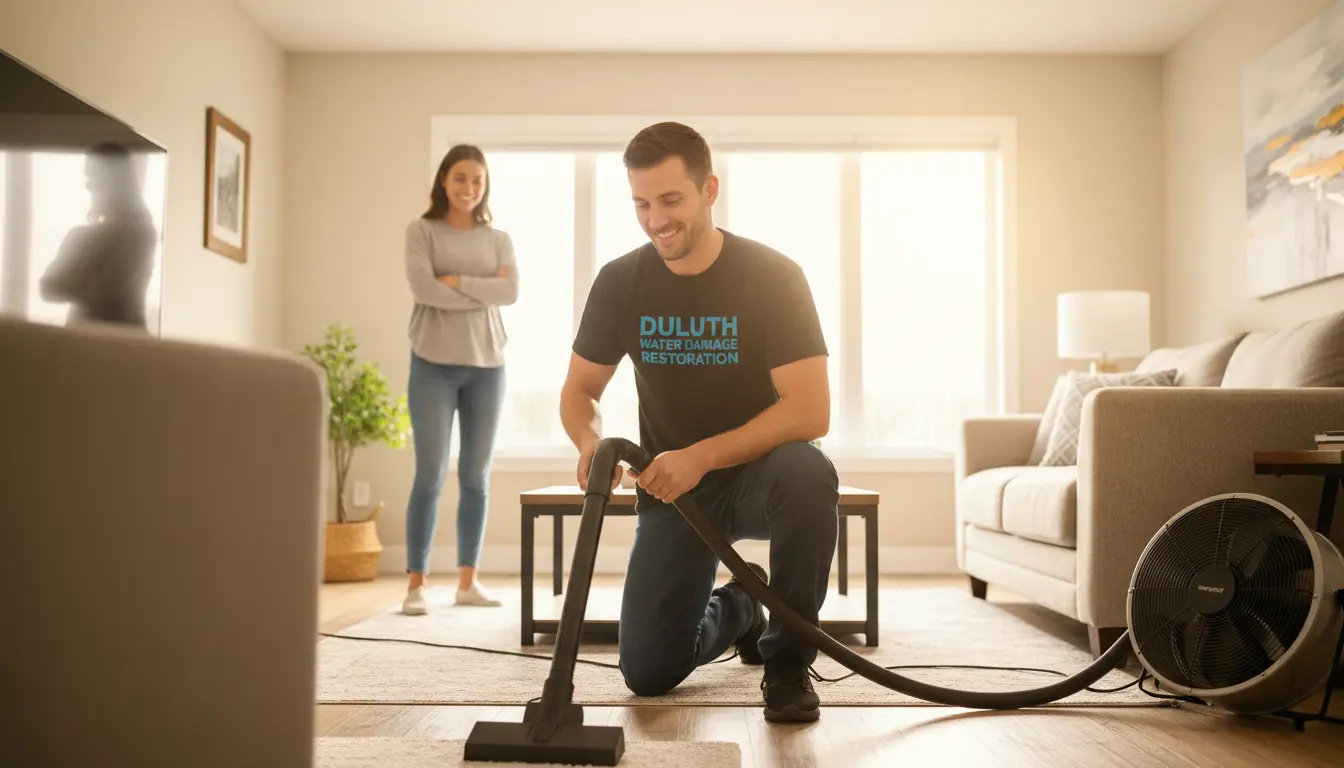
Water damage restoration refers to the process of returning a property to its pre-loss condition after suffering from water damage, which can be caused by various factors such as flooding, burst pipes, or leaks. It is often confused with water removal, which is only one aspect of the restoration process. Water damage restoration involves a comprehensive approach that includes assessing the damage, extracting water, drying the affected area, and restoring the property to its original state.
In Duluth, water damage restoration is crucial due to the city’s location in a region prone to freezing winters and rapid spring snowmelt, which can cause burst pipes and flooding. The city’s proximity to Lake Superior also leads to high humidity levels, making it an ideal environment for mold growth. As a result, immediate professional water mitigation is critical to prevent further damage and ensure the structural integrity of properties.
Duluth Water Damage Restoration is the premier service provider in the area, offering expert solutions for water damage restoration. With their team of certified professionals and state-of-the-art equipment, they can handle any water damage situation, from minor leaks to large-scale flooding. By choosing Duluth Water Damage Restoration, property owners can rest assured that their property will be restored to its pre-loss condition quickly and efficiently.
Technical Process
The technical process of water damage restoration involves several steps, starting with an initial hazard assessment to identify potential risks and determine the best course of action. This is followed by moisture mapping, which involves using specialized equipment such as penetrating moisture meters and thermal imaging cameras to locate and measure the extent of the water damage.
Standing water extraction is the next step, which involves using truck-mounted extraction units to remove water from the affected area. This is followed by evaporation and dehumidification, which involves using LGR dehumidifiers and centrifugal air movers to dry the area and prevent further moisture buildup. Finally, anti-microbial application is used to prevent the growth of mold and bacteria.
Local variables such as freezing ambient temperatures and indoor heating dynamics can affect the chosen drying method. For example, in cold weather, it may be necessary to use heated drying equipment to speed up the drying process. In contrast, in warm weather, it may be possible to use natural ventilation to dry the area.
Data Comparison Table
When it comes to water damage restoration, it is essential to use the right equipment to ensure effective and efficient drying. The following table compares the features and metrics of professional LGR dehumidifiers and standard residential dehumidifiers:
| Feature/Metric | Professional LGR Dehumidifiers | Standard Residential Dehumidifiers |
|---|---|---|
| Water Removal Rate | High | Low |
| Drying Time | Faster | Slower |
| Risk of Secondary Mold | Low | High |
Source: IICRC S500 Reference Guide
Expert Insights
As a certified senior water damage restoration expert, I can provide the following advanced professional tips: understanding vapor pressure differentials is crucial in determining the best drying method; safely shutting off utilities is essential to prevent further damage; and isolating wet zones is critical to prevent the spread of mold and bacteria.
Common mistakes property owners make include relying on surface drying while ignoring trapped moisture, delaying extraction, and using improper equipment. These mistakes can lead to structural rot, secondary mold proliferation, and delamination of flooring, resulting in costly repairs and potential health risks.
Pricing
The pricing structure for water damage restoration services can vary depending on several factors, including the extent of the damage, the type of equipment used, and the duration of the restoration process. Some common pricing structures include:
- Per square foot of extraction
- Daily equipment rental rates (air movers, dehumidifiers)
- Costs based on the Class and Category of water damage
Factors that influence cost include Category 3 black water sanitation, hazardous material handling like asbestos/lead in older Duluth homes, and structural tear-out requirements.
Safety and Standards
Safety is a top priority in water damage restoration, and it is essential to follow specific certifications, safety protocols, and use EPA-registered biocides and proper PPE. The IICRC WRT/ASD certification is a recognized standard in the industry, and technicians should always follow safety protocols when handling contaminated water, electrical hazards, and airborne mold spores.
FAQ Section
What is the difference between Category 1, 2, and 3 water damage?
Category 1 water damage refers to clean water, such as from a burst pipe, while Category 2 water damage refers to gray water, such as from a washing machine or dishwasher. Category 3 water damage refers to black water, such as from sewage or floodwater, which poses a significant health risk.
How long does the water damage restoration process take?
The length of the water damage restoration process depends on several factors, including the extent of the damage, the type of equipment used, and the duration of the restoration process. In general, the process can take anywhere from a few days to several weeks.
Can I handle water damage restoration myself?
While it is possible to handle minor water damage restoration yourself, it is generally recommended to hire a professional service provider to ensure that the job is done correctly and safely. Professional service providers have the necessary equipment, training, and experience to handle any water damage situation, and they can help prevent further damage and ensure the structural integrity of your property.
Will my insurance cover water damage restoration?
Most insurance policies cover water damage restoration, but it is essential to check your policy to determine the extent of your coverage. It is also crucial to document the damage and keep records of all correspondence with your insurance provider to ensure that you receive the compensation you are entitled to.
Professional Water Damage Restoration in Duluth
In conclusion, water damage restoration is a complex process that requires immediate attention and professional expertise. Duluth Water Damage Restoration is the premier service provider in the area, offering expert solutions for water damage restoration. With their team of certified professionals and state-of-the-art equipment, they can handle any water damage situation, from minor leaks to large-scale flooding. By choosing Duluth Water Damage Restoration, property owners can rest assured that their property will be restored to its pre-loss condition quickly and efficiently.