Imagine waking up to the sound of dripping water in your Duluth home, only to discover a burst pipe flooding your basement. Or perhaps heavy rains from a Lake Superior storm have overwhelmed your gutters, turning your cozy living room into a soggy mess. Water damage strikes without warning, especially in our humid Minnesota climate where spring thaws and summer storms are all too common. As a Duluth homeowner, acting swiftly can save thousands in repairs and protect your family’s health. In this guide from Duluth Water Damage Restoration, we’ll walk you through essential emergency water damage repair tips tailored to our local area. Whether it’s a leaky roof after a Gales of November gale or an appliance malfunction, these steps will help you respond effectively until professionals arrive.
Understanding Water Damage in Duluth Homes
Duluth’s unique lakeside location exposes homes to specific risks. Proximity to Lake Superior means higher humidity levels, which can exacerbate water intrusion from cracks in foundations or poor drainage around your property. According to local building codes, many older Duluth homes—built in the early 20th century—lack modern waterproofing, making them vulnerable to seasonal flooding from the St. Louis River or heavy snowmelt.
Water damage isn’t just about visible puddles; it can seep into walls, floors, and ceilings, leading to hidden structural issues. Categories of water damage include clean water from pipes, gray water from appliances, and black water from sewage—each requiring different handling to avoid health hazards like mold growth, which thrives in our cool, damp environment.
Common Causes in the Duluth Area
- Weather-Related Issues: Intense rainfall or snowstorms can overwhelm sump pumps or cause roof leaks. Last year’s record snowfall led to numerous basement floods in neighborhoods like Woodland and Lakeside.
- Plumbing Failures: Aging pipes in historic Duluth districts like the Central Hillside are prone to bursts, especially during freezing winters.
- Appliance Malfunctions: Washing machines or water heaters failing can release gallons of water quickly.
Early detection is key. Regularly inspect your home’s exterior for cracks and ensure gutters direct water away from foundations—a must in our clay-heavy soils that retain moisture.
Immediate Steps for Emergency Water Damage Repair
Time is critical: The first 24-48 hours after water exposure determine the extent of damage. Here’s how to act fast in a Duluth emergency.
1. Ensure Safety First
Before touching anything, prioritize safety. Turn off electricity at the breaker if water has reached outlets or wiring—Duluth’s older homes often have outdated electrical systems that pose shock risks. If the water is from sewage, wear protective gear like gloves and boots to avoid contamination. In flood-prone areas near the Duluth Harbor, check for rising water levels that could indicate broader flooding.
If the damage is extensive, evacuate and call 911 if structural integrity is compromised.
2. Stop the Source of Water
Identify and halt the flow. For a burst pipe, shut off your main water valve—typically located in the basement or near the water meter. In Duluth’s rental properties, know your building’s shut-off locations. If it’s rainwater, tarp the roof temporarily or clear clogged drains. Acting here prevents further intrusion and reduces restoration costs.
3. Remove Standing Water
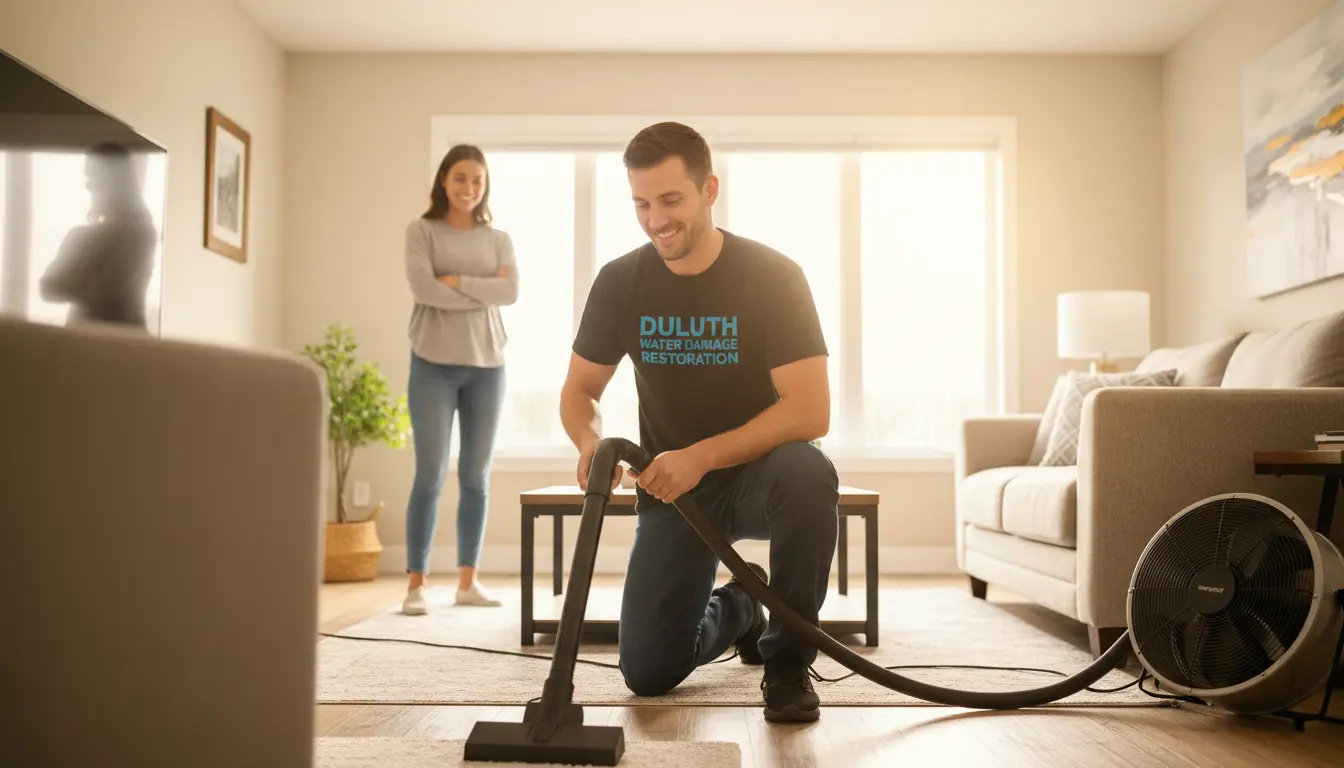
Use wet-dry vacuums, mops, or buckets to extract visible water. For larger areas, rent industrial pumps from local hardware stores like Menards in Duluth. Avoid using household vacuums, as they can short-circuit. In carpeted areas, pull up rugs to prevent mold underneath—Duluth’s high humidity accelerates this process.
Pro Tip: For thorough extraction, consider professional structural drying process to ensure no moisture lingers in walls or subfloors.
Practical Tips for Drying and Cleaning Your Home
Once water is removed, focus on drying to prevent warping, rot, and mold. Duluth’s variable weather means you can’t always rely on natural ventilation.
Effective Drying Techniques
Open windows and doors if humidity is low, but in our foggy mornings, use fans and dehumidifiers instead. Position box fans to circulate air and aim them at affected areas. For basements, elevate items on blocks and use desiccants like silica gel packs.
Invest in or rent dehumidification equipment for faster results—aim for below 50% humidity to inhibit mold. In Duluth’s cooler climate, this might take longer, so monitor with a hygrometer.
Cleaning and Sanitizing
Discard porous items like soaked drywall or insulation that can’t be fully dried within 48 hours. Clean hard surfaces with a mixture of water and mild detergent, then disinfect with a bleach solution (1 cup per gallon of water). For upholstery or carpets, professional carpet and upholstery cleaning is essential to remove contaminants.
If sewage is involved, handle with care—sewage backup restoration experts recommend avoiding DIY to prevent bacterial spread.
Preventing Mold Growth
Mold can start growing in 24 hours in Duluth’s damp conditions. Remove wet materials promptly and apply antimicrobial treatments. Improve ventilation by fixing leaks and using exhaust fans in bathrooms and kitchens. For severe cases, consult mold remediation experts to assess hidden growth behind walls.
Local Insight: Duluth’s EPA guidelines emphasize quick action due to our region’s mold-friendly environment—don’t wait for visible signs like musty odors.
When to Call Professionals in Duluth
While DIY helps in minor cases, extensive damage requires experts. Signs include widespread saturation, electrical issues, or black water. Duluth Water Damage Restoration offers 24/7 emergency services, arriving within the hour to assess and mitigate.
We serve not just Duluth but nearby areas like Snellville and Lilburn, using advanced tools for precise restoration. Our team handles insurance claims, saving you hassle during stressful times.
For homes in expanding suburbs like Dacula, we tailor services to local building styles, ensuring compliance with Minnesota codes.
FAQ: Emergency Water Damage Repair in Duluth
How quickly should I act after discovering water damage?
Immediately—within minutes to stop the source and hours to begin drying. Delays in Duluth’s climate can lead to mold in under a day.
Can I handle small water damage myself?
Yes, for minor clean water spills, but consult pros for anything involving walls, electricity, or sewage to avoid health risks.
Does homeowners insurance cover water damage in Duluth?
Most policies cover sudden events like bursts, but not neglect like poor maintenance. Contact your provider and our team for guidance.
How long does restoration take?
It varies: Minor jobs 2-3 days; major floods up to weeks, depending on extent and drying needs.
Is mold a big issue after water damage here?
Absolutely—Duluth’s humidity makes it common. Professional inspection is recommended if water sat for over 48 hours.
Conclusion: Protect Your Duluth Home Today
Water damage can disrupt life in our beautiful lakeside city, but with these tips—from stopping the source to thorough drying—you’re equipped to respond. Remember, prevention like annual inspections and proper drainage around your Duluth property goes a long way. For peace of mind, partner with Duluth Water Damage Restoration. Our certified technicians are ready to restore your home efficiently and compassionately. Don’t wait for the next storm—contact us today for a free assessment and get back to enjoying Duluth’s scenic views without worry.