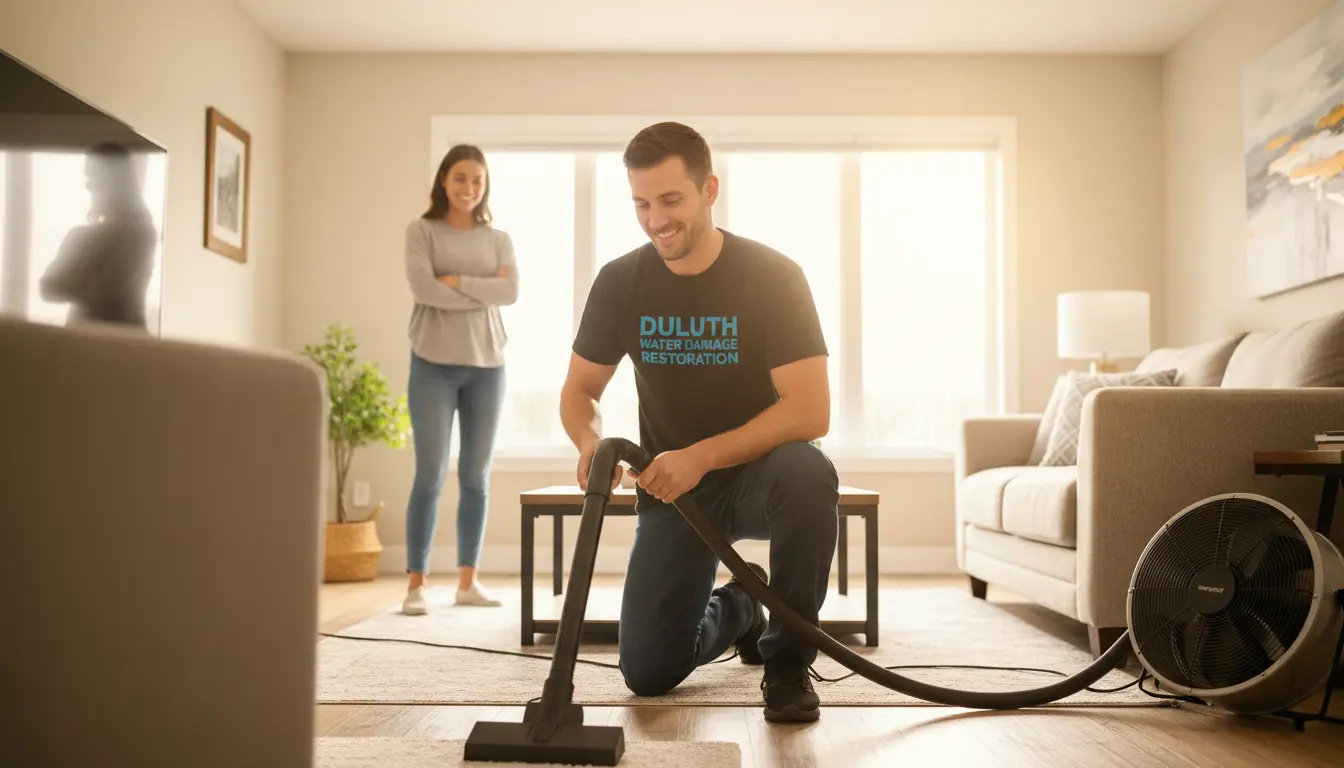
According to a study by the Insurance Information Institute, in 2020, water damage accounted for approximately 44% of all homeowners’ insurance claims in the United States, with an average claim cost of around $11,000. This statistic highlights the significance of water damage as a major concern for homeowners in Duluth, Minnesota, where freezing winter temperatures and rapid spring snowmelt can cause pipes to burst and flooding to occur.
The importance of immediate professional water mitigation in Duluth cannot be overstated. Delaying water damage restoration can lead to secondary damage, such as mold growth, structural rot, and delamination of flooring, which can result in costly repairs and even health risks. As a premier, authoritative service provider in the area, Duluth Water Damage Restoration is committed to providing prompt and effective water damage restoration services to homeowners in Duluth.
Water damage can occur in various ways, including burst pipes, appliance leaks, and roof leaks. Regardless of the cause, it is essential to address the issue promptly to prevent further damage. For more information on preventing water damage, visit our Top 7 Causes Of Water Damage For Duluth Residents page.
Technical Process of Water Damage Restoration
The technical process of water damage restoration involves several steps, including initial hazard assessment, moisture mapping, standing water extraction, evaporation/dehumidification, and anti-microbial application. The first step is to assess the damage and identify any potential hazards, such as electrical or structural hazards. Next, moisture mapping is used to determine the extent of the water damage and identify areas that are most affected.
Standing water extraction is then performed using specialized equipment, such as truck-mounted extraction units or portable extraction units. The goal of this step is to remove as much water as possible from the affected area to prevent further damage. After extraction, evaporation/dehumidification is used to dry the area and prevent mold growth. This is typically done using LGR dehumidifiers, centrifugal air movers, and other specialized equipment.
Finally, anti-microbial application is used to prevent the growth of mold and bacteria in the affected area. This is typically done using EPA-registered biocides and other specialized products. For more information on the water restoration process, visit our Ultimate Guide To Water Restoration In Duluth Ga page.
Data Comparison Table
The following table compares the features and metrics of professional LGR dehumidifiers and standard residential dehumidifiers:
| Feature/Metric | Professional LGR Dehumidifiers | Standard Residential Dehumidifiers |
|---|---|---|
| Water Removal Rate | Up to 25 gallons per day | Up to 5 gallons per day |
| Drying Time | 24-48 hours | Several days to several weeks |
| Risk of Secondary Mold | Low | High |
Source: IICRC S500 Reference Guide
Expert Insights
Here are three advanced professional tips for water damage restoration: understanding vapor pressure differentials, safely shutting off utilities, and isolating wet zones. Additionally, there are several common mistakes that property owners make when dealing with water damage, including relying on surface drying while ignoring trapped moisture, delaying extraction, and using improper equipment.
For example, using a wet/dry vacuum to extract water from a flooded area may seem like a good idea, but it can actually push water further into the structure, causing more damage. Instead, it is recommended to use a professional-grade extraction unit, such as a truck-mounted extraction unit, to remove water from the affected area. For more information on emergency water damage repair, visit our Emergency Water Damage Repair Duluth Home Tips page.
Pricing
The cost of water damage restoration can vary depending on several factors, including the extent of the damage, the type of equipment used, and the location of the property. Here are some realistic pricing structures for water damage restoration: per square foot of extraction, daily equipment rental rates, and costs based on the Class and Category of water damage.
Some of the factors that influence the cost of water damage restoration include the Category 3 black water sanitation, hazardous material handling, and structural tear-out requirements. For example, if the water damage is caused by a sewage backup, the cost of restoration may be higher due to the need for specialized equipment and procedures to handle the contaminated water.
Safety and Standards
Safety and standards are critical components of water damage restoration. It is essential to follow specific certifications, such as IICRC WRT/ASD, and safety protocols, such as the use of EPA-registered biocides and proper PPE, to ensure the safe and effective restoration of the property.
For example, when dealing with contaminated water, such as sewage or floodwater, it is essential to wear proper PPE, including gloves, masks, and eye protection, to prevent the risk of infection or illness. Additionally, it is crucial to follow proper safety protocols when using equipment, such as generators or pumps, to prevent electrical shock or other accidents.
FAQ Section
What is the average cost of water damage restoration?
The average cost of water damage restoration can vary depending on several factors, including the extent of the damage, the type of equipment used, and the location of the property. However, according to the Insurance Information Institute, the average cost of a water damage claim in the United States is around $11,000.
How long does it take to dry a water-damaged property?
The time it takes to dry a water-damaged property can vary depending on several factors, including the extent of the damage, the type of equipment used, and the ambient temperature and humidity. However, with the use of professional-grade equipment, such as LGR dehumidifiers and centrifugal air movers, it is possible to dry a property in as little as 24-48 hours.
What are the risks of delaying water damage restoration?
Delaying water damage restoration can lead to several risks, including secondary damage, such as mold growth, structural rot, and delamination of flooring. Additionally, delaying restoration can also lead to health risks, such as respiratory problems and other illnesses, particularly for people with weakened immune systems.
Do I need to hire a professional for water damage restoration?
While it may be tempting to try to restore a water-damaged property on your own, it is highly recommended to hire a professional for water damage restoration. Professionals have the training, equipment, and expertise to safely and effectively restore a property, and can help to prevent further damage and health risks.
Professional Water Damage Restoration in Duluth
In conclusion, water damage restoration is a critical process that requires immediate attention and professional expertise. As a premier, authoritative service provider in the area, Duluth Water Damage Restoration is committed to providing prompt and effective water damage restoration services to homeowners in Duluth. For more information on our services, visit our Insurance Claim Support page or our Duluth page. We also serve nearby cities, including Johns Creek, Suwanee, Lawrenceville, and Norcross. Don’t wait until it’s too late, contact us today to schedule your water damage restoration service.